Showing posts with label 2010 Wisconsin Deer Hunting Season. Show all posts

Thursday, December 9, 2010

Statewide antlerless deer hunt to be held Dec. 9-12

Statewide antlerless deer hunt to be held Dec. 9-12
MADISON – Hunters heading out to participate in the December 9-12 statewide antlerless deer hunt need to check deer tagging rules carefully for the unit in which they intend to hunt. The best source of information is the 2010 Wisconsin Deer Hunting Regulations booklet available in hard copy at license vendors or online.
Depending on the type of deer management unit in which a hunter is hunting the following tagging rules apply:

Regular units

  • Requires a unit-specific antlerless tag in these units. Tags, if available, are $12 each for residents and $20 for nonresidents from all license sales agents.
  • “Buck Only” Regular Units: ONLY the following hunters can harvest and tag an antlerless deer in these 18 deer management units.
    • First-time Wisconsin hunter safety education graduates with an unfilled free special antlerless deer carcass tag issued upon completion of safety courses or available at DNR Service Centers (hunter must present their hunter education certificate) or by calling 1-888-936-7463. Group hunting is not allowed to fill this tag.
    • Qualified Armed Forces members (see page 11 of the 2010 hunting regulations for qualifications and tagging requirements).
    • Class A and C Disabled permit holders with an unfilled gun buck deer carcass tag which they may use to shoot a deer of either sex killed with a firearm during the Dec 9-12 hunt.
    • Landowners on properties with agricultural damage permits may issue antlerless permits to hunters who wish to hunt on these properties.

Herd control units

  • Requires a herd control antlerless deer carcass tag in these deer management units. Additional tags are available for $2 each from all license sales agents.

Chronic wasting disease management units

  • Hunters may use any unfilled 2010 deer carcass tag in these 22 deer management units.
A “Frequently Asked Questions fact sheet on the 2010 Deer Hunt Season Structure and Tagging" (pdf) is available on the DNR website.

Other things to keep in mind

Hunters should also be mindful that a lot of people are out enjoying Wisconsin’s outdoors including cross country skiers and snowmobilers who may not be aware of on-going hunting seasons and not wearing blaze orange.

“Always be sure of your target and what is beyond,” says Chief Conservation Warden Randy Stark,
All gun deer, archery and small game hunters, except waterfowl hunters, are required to wear blaze orange during this 4-day antlerless deer hunt and follow all safety guidelines. Non-hunters should consider wearing bright or blaze orange clothing to increase their visibility while recreating in areas being hunted.

“Hunting is a safe today as it’s ever been and getting safer” Stark said. “The recently completed nine-day gun deer hunt was firearm fatality free for just the second time in our records and with everyone’s help and attention to firearm safety, we can keep it that way.”

Hunters with additional questions about the season structure or tagging requirements can contact the toll-free DNR information line at 1-888-WDNRINFo (1-888-936-7463).
News Release Published: December 3, 2010 by the Central Office
Contact(s): Keith Warnke – (608) 264-6023 or Jason Fleener – (608) 261-7589
Source: Wisconsin DNR
Site: http://dnr.wi.gov/news/BreakingNews_Lookup.asp?id=1935

Monday, December 6, 2010

Hunters register a preliminary tally of 218,144 deer over nine-day season


MADISON – A survey of Wisconsin deer registration stations conducted by the state Department of Natural Resources has yielded a preliminary tally of 218,144 for the just-ended, nine-day November gun deer hunt, an 11 percent increase over the 2009 nine-day season. The opener was highlighted by good hunting conditions on opening day and no firearm-related fatalities for only the second time on record (see related news release).

Statewide, hunters registered 102,006 bucks (a 17 percent increase over 2009) and 116,138 antlerless deer (a nearly 7 percent increase over 2009). Gun deer license sales totaled 621,094 at the close of the hunt.
The nine-day harvest numbers are preliminary and are expected to change before a final report is published in late winter. It does not include harvest information from the archery, October antlerless gun deer hunt, muzzleloader, December antlerless deer gun hunt or late archery seasons. The preliminary nine-day gun harvest count in 2009 was 196,688.

A table of county by county (pdf; 39kb) harvest broken down by DNR region, with a comparison to the 2009 preliminary harvest is available on the DNR Web site.

“This season included more regular units with a substantial number of buck only units as many units in the northern and central forest regions are close to population goals or are below goals,” said Keith Warnke. “Wildlife management and especially deer management is a process of continual adjustment. This season’s structure was influenced by deer hunters, population goal changes, last year’s deer harvest, and the resulting estimated local deer populations.”
Late seasons now open
“There are still days to hunt in 2010,” said Warnke. “The muzzleloader hunt is already underway for hunters holding unused gun buck and antlerless deer tags and there’s the statewide antlerless deer hunt Dec. 9-12.”
Hunters are reminded that the antlerless deer hunt Dec. 9-12 is open only to hunters with a valid antlerless deer tag for the unit in which they are hunting. That means that in many units in northeast Wisconsin, there will be little or no hunting during that four-day season.

There is the Holiday hunt in CWD zones in south central Wisconsin that starts Dec. 24 and lasts until Jan. 9, 2011.

In February, DNR biologists will use unit-level harvest numbers to develop overwinter population estimates and will propose season structures for 2011 in March. The Natural Resources Board will approve season structures at their April meeting.

Hunters asked to participate in online Deer Hunter Wildlife Survey

The Deer Hunter Wildlife Survey is still active until the end of all deer seasons and wildlife managers are asking hunters to keep sending in reports or to send in a report of what they saw during the just completed 9-day gun hunt.

“The observations of over 600,000 hunters spread out all across Wisconsin are invaluable to biologists watching for trends in wildlife populations,” said Brian Dhuey, DNR research scientist who compiles most of Wisconsin’s wildlife harvest and survey statistics. “The more observations the better in terms of tracking trends in species abundance and distribution.”

Hunter volunteers being recruited for deer research starting this winter

Following the close of the 2010-11 deer hunting seasons, DNR and UW researchers will shift into high gear with several multi-year deer research efforts.

Volunteers are needed to accompany and assist researchers in obtaining permission to access private property, live-capturing deer, fitting them with radio transmitters and then observing the marked deer for causes of death, fawn production and fawn survival. This research effort is intended to answer hunter questions regarding the role of predators on deer populations, factors affecting fawn recruitment and hunter harvest rate of bucks. Interested volunteers can find out more information and sign up on the White-tailed Deer Research Projects page of the DNR website.

Young hunters prove themselves safe and responsible

“What is really exciting, is the 11,331 mentored gun deer hunting licenses purchased by 10- and 11-year olds,” said Diane Brookbank, chief of DNR’s licensing and customer service unit, “an increase of more than 1,400 licenses over 2009. These are the future hunters who will step into the woods in place of the hunting ‘retirees’ as our population ages.”

Wardens reported no firearm incidents among these young hunters.

More than 621,000 gun deer licenses sold

DNR’s automated License Issuance System, known as ALIS, peaked at 330 transactions per minute at 5:30 p.m. on the Friday before gun season. The 621,094 gun licenses sold through the end of the season on Nov 28 was a 3 percent drop from 2009 gun deer sales.

Archery license sales stayed with recent trends and increased by 510 licenses compared to the same period in 2009.

FOR MORE INFORMATION CONTACT: Keith Warnke – (608) 264-6023, Jason Fleener - (608) 261-7589 or Bob Manwell – (608) 264-9248

Source: Wisconsin Department of Natural Resources
Site: http://dnr.wi.gov/news/DNRNews_Lookup.asp?id=252#art1


Tuesday, November 30, 2010

2010 gun deer season free of firearm fatalities for second time in state’s history

Volunteer hunter education instructors big factor in safety’s home run

MADISON – Wisconsin ended its 2010 gun-deer season free of hunter fatalities, a feat first and last seen in 1974.

“No one was shot and killed while deer hunting this year in Wisconsin,” said Tim Lawhern, Department of Natural Resources hunter education administrator and conservation warden. “This has happened once before in the state’s history of gun-deer seasons. And that was 36 years ago.”

Overall, there were 12 hunting incidents during the nine-day deer gun season. Lawhern said that for the families of those injured hunters, 2010 didn't feel like a success. The agency only tracks firearm-related incidents and does not keep track of deaths or injuries due to heart attacks, tree stand falls or other causes.

“Any shooting incident is one too many,” Lawhern said. “We wish them all speedy recoveries.”

Lawhern, who also serves as the president of the International Hunter Education Association, says several factors are behind the successful hunt.

Education, guidelines and technology
High on Lawhern’s list as a key factor behind the second-only fatal-free season in Wisconsin’s history of the gun-deer hunt is the participation in the DNR Hunter Education Program – which began as hunter safety classes in 1967.

“The year before hunter education began in Wisconsin, the incident rate was 44 injuries for every 100,000 hunters,” Lawhern said, adding the 1967 course was six hours long and covered firearm safety only.

Things have changed since 1967.

“Since that time, we have seen things like the creation of opening and closing hours for hunting, mandatory blaze orange for hunters, full safety harnesses, firearm restrictions, global positioning satellite devices, cell phones and more,” he said. “All of these have contributed to the increased safety for hunters.”

Wisconsin’s hunter education certification program became mandatory for all hunters born or after Jan. 1, 1973 in 1985. That meant any hunter 12, the youngest legal hunter, beginning in 1985 had to complete the hunter education program.

“We have certified almost one million graduates. Our program has led the way both nationally – and internationally – with improved delivery, curriculum and outreach regarding safe and responsible hunting,” Lawhern said of the program taught by volunteer instructors statewide. Wisconsin’s hunter education program has had many firsts, including the nation’s first online course, instructor academy and a junior instructor program.

“The hunter education program also has evolved into more topics including knowledge, responsibility and ethics,” he said.

While the fatal-free season is a victory for safety, Lawhern says it wasn’t a complete surprise.

Predicting the fatal-free season, and the four rules of firearm safety
Lawhern says considering all the progress made in hunting, along with looking at the records behind every shooting incident of past seasons, made it easy to predict the fatal-free season was coming.

“We know a tremendous amount about hunting incidents. We can predict who is going to be shot. We can predict how many, where and what they are going to be doing at that moment,” Lawhern said. “We just don’t have the names and addresses.”

Lawhern’s analysis shows about one-third to one-half of all injuries is related to deer drives. The self-inflicted injuries will be one-third to one half of all the total of the gun-deer season.

“We also know the shooters younger than 18 will make up about 20 to 30 percent of the shooting injuries. The vast majority will occur on private land and half will happen on opening weekend,” he said. “Ultimately, nearly all are linked to a violation of one or more of the four basic rules of firearm safety – treat every firearm as if it is loaded, never point your firearm at a person, never put your finger in the trigger until you are ready to shoot and know what is behind your target.”

And, Lawhern says, the most significant contributors to hunting incidents are those 35 and older – the hunters not covered by the mandatory hunter education course rule. “All hunters should take the hunter education certification course – no matter the age.”

Safety doesn’t take breaks
“Our hunter education program is revered as one of, if not the best in the country,” Lawhern said, adding most of the volunteer instructors have never experienced a gun-deer season free of fatalities. “Those instructors, along with other factors, are major contributors to the success and safety of hunting.”

The course helps all hunters to make safety a habit.

“Safety does not take a vacation. Either you are safe all the time, every time, or you are not. You are only as safe as the next hunt,” he said.

Lawhern says he hopes those who haven’t completed the hunter education certification course will make it a priority in 2011 to make the next gun-deer season the third fatal-free in the state’s history. More information about hunter safety education is available on the DNR website.

FOR MORE INFORMATION CONTACT: Tim Lawhern – (608) 266-1317

Source: Wisconsin DNR
Site: http://dnr.wi.gov/news/DNRNews_Lookup.asp?id=252#art2

Hunters register a preliminary tally of 218,144 deer over nine-day season

MADISON – A survey of Wisconsin deer registration stations conducted by the state Department of Natural Resources has yielded a preliminary tally of 218,144 for the just-ended, nine-day November gun deer hunt, an 11 percent increase over the 2009 nine-day season. The opener was highlighted by good hunting conditions on opening day and no firearm-related fatalities for only the second time on record (see related news release).

Statewide, hunters registered 102,006 bucks (a 17 percent increase over 2009) and 116,138 antlerless deer (a nearly 7 percent increase over 2009). Gun deer license sales totaled 621,094 at the close of the hunt.

The nine-day harvest numbers are preliminary and are expected to change before a final report is published in late winter. It does not include harvest information from the archery, October antlerless gun deer hunt, muzzleloader, December antlerless deer gun hunt or late archery seasons. The preliminary nine-day gun harvest count in 2009 was 196,688.

A table of county by county (pdf; 39kb) harvest broken down by DNR region, with a comparison to the 2009 preliminary harvest is available on the DNR Web site.

“This season included more regular units with a substantial number of buck only units as many units in the northern and central forest regions are close to population goals or are below goals,” said Keith Warnke. “Wildlife management and especially deer management is a process of continual adjustment. This season’s structure was influenced by deer hunters, population goal changes, last year’s deer harvest, and the resulting estimated local deer populations.”

Late seasons now open
“There are still days to hunt in 2010,” said Warnke. “The muzzleloader hunt is already underway for hunters holding unused gun buck and antlerless deer tags and there’s the statewide antlerless deer hunt Dec. 9-12.”

Hunters are reminded that the antlerless deer hunt Dec. 9-12 is open only to hunters with a valid antlerless deer tag for the unit in which they are hunting. That means that in many units in northeast Wisconsin, there will be little or no hunting during that four-day season.

There is the Holiday hunt in CWD zones in south central Wisconsin that starts Dec. 24 and lasts until Jan. 9, 2011.

In February, DNR biologists will use unit-level harvest numbers to develop overwinter population estimates and will propose season structures for 2011 in March. The Natural Resources Board will approve season structures at their April meeting.

Hunters asked to participate in online Deer Hunter Wildlife Survey

The Deer Hunter Wildlife Survey is still active until the end of all deer seasons and wildlife managers are asking hunters to keep sending in reports or to send in a report of what they saw during the just completed 9-day gun hunt.

“The observations of over 600,000 hunters spread out all across Wisconsin are invaluable to biologists watching for trends in wildlife populations,” said Brian Dhuey, DNR research scientist who compiles most of Wisconsin’s wildlife harvest and survey statistics. “The more observations the better in terms of tracking trends in species abundance and distribution.”

Hunter volunteers being recruited for deer research starting this winter

Following the close of the 2010-11 deer hunting seasons, DNR and UW researchers will shift into high gear with several multi-year deer research efforts.

Volunteers are needed to accompany and assist researchers in obtaining permission to access private property, live-capturing deer, fitting them with radio transmitters and then observing the marked deer for causes of death, fawn production and fawn survival. This research effort is intended to answer hunter questions regarding the role of predators on deer populations, factors affecting fawn recruitment and hunter harvest rate of bucks. Interested volunteers can find out more information and sign up on the White-tailed Deer Research Projects page of the DNR website.

Young hunters prove themselves safe and responsible

“What is really exciting, is the 11,331 mentored gun deer hunting licenses purchased by 10- and 11-year olds,” said Diane Brookbank, chief of DNR’s licensing and customer service unit, “an increase of more than 1,400 licenses over 2009. These are the future hunters who will step into the woods in place of the hunting ‘retirees’ as our population ages.”

Wardens reported no firearm incidents among these young hunters.

More than 621,000 gun deer licenses sold

DNR’s automated License Issuance System, known as ALIS, peaked at 330 transactions per minute at 5:30 p.m. on the Friday before gun season. The 621,094 gun licenses sold through the end of the season on Nov 28 was a 3 percent drop from 2009 gun deer sales.

Archery license sales stayed with recent trends and increased by 510 licenses compared to the same period in 2009.

FOR MORE INFORMATION CONTACT: Keith Warnke – (608) 264-6023, Jason Fleener - (608) 261-7589 or Bob Manwell – (608) 264-9248

Source: Wisconsin DNR
Site:http://dnr.wi.gov/news/DNRNews_Lookup.asp?id=252#art1

Thursday, November 18, 2010

Preliminary deer hunter wildlife survey results

MADISON -- Eight weeks into the 2010 deer hunting seasons, deer sightings are up slightly over 2009 in most areas of the state, according to early returns from the Deer Hunter Wildlife Survey.

With the archery season in full swing, and the opening of the 2010 gun deer season only a few days away, 797 Wisconsin hunters have sent in reports from 3,026 hunting trips to the online survey. Trips were reported from all 72 counties in the state, and in 124 of 139 deer management units. Hunters reported spending 14,577 hours in the field, and averaged 4.5 hours per trip.

“Thanks to all the hunters who have sent in reports,” said Keith Warnke, big game ecologist for the Department of Natural Resources. “This is valuable information that will become more valuable as the years go by and we can begin to track any trends in wildlife abundance and range.

Preliminary results from 2010 are available on the Deer Hunter Wildlife Survey page of the DNR website, final results from the 2009 season can be found there as well. Periodically during the deer season the department will publish up-to-date deer observation numbers giving hunters a good snapshot of what they and others are seeing in their hunting area.

“For this kind of survey the more reports the better, so please consider participating and send in a report or multiple reports. We publish this information online where hunters can easily access it and use it to their advantage in planning their hunting strategy.”

The survey asks deer hunters to report their hunting activity and share their observations of deer, raccoon, skunk, porcupine, red and gray fox, turkey, ruffed grouse, coyote, bear, otter, fisher, bobcat, house cat, badger, wolf, opossum, elk or any other wildlife seen where they hunt.

The most frequently observed species other than deer were turkeys. The next most frequently seen animal was ruffed grouse.

Deer hunters have reported 1,444 bucks, 1,949 does, 1,376 fawns, and 503 unknowns. Statewide, hunters averaged 0.36 deer seen per hour. Deer seen per hour varied between regions with the high being the Western Farmland averaging 0.51 deer per hour and the low being the Central Forest averaging 0.15 deer per hour. The Northern Forest and Southern Farmland reported 0.32 and 0.35 deer per hour, respectively. Hunters in the Eastern Farmland saw 0.46 deer per hour.

New this year, hunters can get a summary of their hunting activity and observations at the end of the survey period. All they have to do is provide their email address when they log their hunting activity and the DNR will send them a summary at the end of the survey period. This year, 243 individuals have supplied an email address to have a summary of their observations e-mailed to them at the end of the survey period.


FOR MORE INFORMATION CONTACT: Keith Warnke – (608) 264-6023
Source: Wisconsin DNR
Site: http://dnr.wi.gov/news/DNRNews_Lookup.asp?id=250#art2

Saturday, November 13, 2010

A message to hunters from DNR Secretary Matt Frank

MADISON – As Wisconsin deer hunters make final preparations for the 2010 gun deer hunt, Department of Natural Resources Secretary, Matt Frank wishes all hunters good luck and good hunting:
“The annual deer hunt is an incredible tradition that links generations and families and friends. We can be proud that Wisconsin is known across the country as a premier deer hunting destination. On the eve of this year's hunt, I wish everyone a safe and enjoyable hunt.”

Be sure to tune in Nov.11 at 8 p.m. to the 2010 Deer Show on Milwaukee Public Television station MPTV 10.1 and the Wisconsin Channel of Wisconsin Public Television across the state. A directory of stations can be found on the Wisconsin Public Television website [www.wpt.org/wisconsinchannel] (exit DNR). Hosted by public television’s Dan Small and sponsored by the Department of Natural Resources, the goal of the hour-long broadcast is to review what every hunter needs to know and share some tips that might be new even for the most skilled deer hunters. Viewers will also hear from several veteran hunters “sitting ‘round the campfire” sharing stories and thoughts about memorable hunts, memorable moments in their hunting careers and why they hunt.

For hunters looking for information on the 2010 deer season outlook for the state as a whole and region by region the DNR’s Bureau of Wildlife has published a 2010 Fall Hunting and Trapping Forecast, which contains outlooks for deer and many other popular game species along with commentary and analysis by wildlife biologists from around the state.

“A big part of a tradition like the Wisconsin deer hunt is helping newcomers to enjoy it. If you haven't already, I encourage you to introduce a new hunter to the sport. Our mentored hunting program is a great way to introduce anyone, but especially kids, to hunting. Today's new hunters keep the tradition alive for future generations.”

Source: Wisconsin DNR
Site: http://dnr.wi.gov/news/DNRNews_Lookup.asp?id=249#art1

Wisconsin’s nine-day regular gun deer season opens Nov. 20

Wisconsin’s nine-day regular gun deer season opens Nov. 20

MADISON – Wisconsin’s regular nine-day gun deer hunting season opens Saturday, Nov. 20 and runs through Sunday, Nov. 28. State wildlife officials say that while herd control has been the primary statewide focus over the last decade – and remains so in areas of the state this year -- herd growth is actually the primary objective throughout much of northeast Wisconsin for 2010.

Following a review of population goals that included extensive public input and legislative review, deer population goals were increased in 43 units this year. The end results are season structures and permit levels that will be aimed toward a more conservative antlerless harvest, according to Keith Warnke, deer and bear ecologist with the Department of Natural Resources.
As a result, this year nearly half of the state’s deer management units are under a “regular” season structure, and 19 of those units – primarily in far northeastern Wisconsin – are under a buck-only season structure. In regular units hunters may only shoot an antlered deer with their regular license, unless they purchase an additional unit-specific antlerless permit if they are available for that unit.

Roughly the other half of DMUs remain under a herd-control structure because the population of those units is estimated to be 20 percent or more over established population goals. In herd control units, hunters may shoot an antlered deer with their deer hunting license and may shoot an antlerless deer with the free herd-control antlerless permit that comes with their license in any herd control unit.

There are 22 units in southern Wisconsin in the chronic wasting disease management zone that will again have unlimited earn-a-buck regulations intended to meet deer population goals and disease management objectives. In these units, a hunter must first shoot an antlerless deer during a 2010 open season such as the archery deer or October antlerless seasons or have an unused 2009-2010 buck harvest authorization sticker to shoot an antlered deer.

In 2009, more than 635,000 licensed hunters registered a statewide harvest of approximately 330,000 deer. This fell well short of Wisconsin’s previous five-year annual harvest average of 492,000 deer. Several contributing factors resulted in a reduced harvest, but a reduced deer population and a reduction in antlerless harvest are thought to have played the biggest roles. A reduced annual harvest is also a sign that deer populations across the state are nearing management goals.
“The elimination of earn-a-buck outside of the CWD management zone last year also allowed all hunters to take bucks and pass on antlerless deer. Hunters who will be hunting in former earn-a-buck units may notice an increase in the number of antlerless deer and fewer mature bucks this year,” Warnke said.

Regardless of statewide or DMU level deer populations and expectations, Warnke says that deer abundance on a single property or local level often does not reflect deer population trends on the larger scale. Pre-season scouting and discussions with local neighbors will give hunters a better expectation of the hunt in their local hunting area.

“Autumn is beautiful and fleeting. For hunters, this is the best time of year. For many, the preparations for hunting – setting up stands, scouting for promising trees, looking for deer sign, practicing marksmanship – are a big part of enjoying the season.”
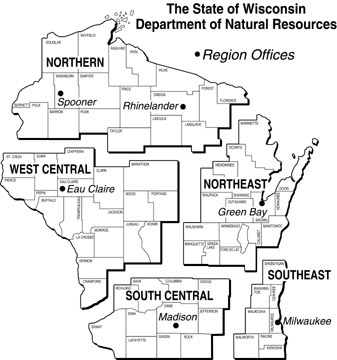
Regional Season Forecasts
Wisconsin DNR Regions

Wisconsin DNR Regions

Southeast Region
Deer populations in the Southeast Region remain relatively high compared to established population goals in all units except DMU 69, which is a regular unit. The remaining units are in Herd Control season frameworks, with units in the CWD Management Zone continuing under earn-a-buck regulations. While earn-a-buck regulations have been effective in reducing deer populations in the CWD units, there are still good deer numbers and harvest opportunities. Helicopter and fixed-wing deer surveys conducted in the CWD zone revealed significant, but unevenly distributed deer numbers. Scouting is more important than ever because of the lowered deer populations and uneven distribution

Good opportunities for deer hunting exist throughout the region but deer distribution varies greatly, depending on habitat and hunting pressure. Some of the bigger blocks of deer habitat are found on the Kettle Moraine State Forest and State Wildlife Areas. Hunting pressure is usually high on public lands. Scouting to find several hunting spots in advance of the hunting season will provide alternatives come opening day.- Dale Katsma, Acting Regional Wildlife Biologist

West Central Region
A majority of units in the West Central Region are near goals, with 10 units having a population high enough to require herd control. With the milder winter and the early spring, fawn production should be good. This past winter the overwinter goals were raised in 15 units allowing for a larger deer population in these units.
Those units that are near or below population goals have a regular deer season framework. Some of these units have a very limited number of antlerless tags available, so remember to purchase your antlerless tags early. In the remaining West Central Region units, deer populations remain higher than populations goals, so these units will follow the Herd Control framework.
Many of the units in the West Central Region are highly productive farmland units where the deer herd can bounce back quickly, so hunters should plan to harvest an antlerless deer or two while they are buck hunting this fall to keep the unit at a more manageable and healthier level. - Greg Dahl, Wisconsin Rapids Area Wildlife Biologist
Northern Region
This past winter was a good one from the white-tailed deer perspective. Overall, it was classified as a “mild winter” in the region. There were a fair amount of cold days, but the really deep snowfalls were lacking. However, there was some severe winter in parts of the north and quota recommendations were lowered in these units due to winter.

The region also had a very mild and early spring. This allowed for an early green-up, which is absolutely critical for deer coming off the winter. We started to see fawns early this year. These fawns are really getting a head-start to get ready for the next winter. This will help with over winter survival and future production. This will give a real boost in DMUs where we are rebuilding the herd. It also gives us caution to make sure the herd does not exceed the natural carrying capacity of the land in many other DMUs in the north. This is why there is a real mix of season structures and antlerless deer quotas in northern Wisconsin for the 2010 deer season.

There are 15 DMUs in the region where the gun antlerless deer quota is zero, meaning these units are buck-only units. There are 24 DMUs that have a range of antlerless permits available and there are seven units that will be in the Herd Control Season structure.- Mike Zeckmeister, Regional Wildlife Biologist
Northeast Region
Deer populations in the 16-county Northeast Region continue to be the tale of two differing habitats. The northern forest deer herd has not yet shown indications of improved productivity, while the farmland herds remain above goals despite long-running liberal harvest regulations for antlerless deer. Most of the region south of State Highway 64 and DMU 51A to the north remain in Herd Control status. Summer deer surveys in August and September will be watched for signs of improved fawn numbers in the north due to the milder past winter.
The six Northern Forest DMUs in the region remain below population goals and four of them will have a buck-only season framework for both archers and gun hunters in 2010 to give them the greatest chance for herd growth. As forests grow older, deer productivity declines. Hunters should assess their traditional hunting spots with an eye toward general forest age and consider positioning themselves near younger forests if they have not found satisfactory experiences in recent years.

With the absence of earn-a-buck requirements during the 2009 season in northeast farmland units; antlerless harvests dropped dramatically and deer herds grew slightly in most units. Fawn productivity is anticipated to be strong this year, and although some hunters will remain understandably conservative with antlerless harvest in pockets of low deer numbers, farmland unit hunters generally need to be comfortable harvesting antlerless deer in order to avoid another spike in the herd that will require more aggressive harvest regulations in the future. - Jeff Pritzl, Regional Wildlife Biologist

South Central Region
Deer populations are doing well in the South Central Region and hunters should have a great 2010, with one caveat. Hunters should be prepared to scout their hunting areas before the season, and also be prepared to move to areas where deer are found. While all the deer management units in the region are above deer populations goals, deer are very unequally distributed in the region.
The liberal earn-a-buck deer seasons are resulting in heavy hunting pressure in some areas and thus there are few deer in those areas. Other areas are hunted a little lighter and have good deer numbers. And in some areas there is little hunting pressure and there are very high deer numbers. In most of the SCR, the sex-age kill (SAK) population model is not used to determine deer numbers. Instead biologists use helicopters and planes to physically count deer.

One glaring observation is how unequally distributed deer are in the region. The helicopter surveys are conducted in one-square mile blocks. In some blocks, fewer than 10 deer are seen, while just a few miles away there may be 60 deer in a block. The deer season framework is based on managing deer at a certain density, recognizing deer numbers are high in some areas and low in others.

With the exception of northern Dodge and western Grant counties, all of the region’s DMUs will continue to fall under the CWD season framework, which has not changed since 2008. Reducing deer densities is the primary objective to limit spread of this always fatal brain disease in deer, and EAB along with extended gun season opportunities to increasing antlerless harvest are still in effect.

Hunters will again be able to get their deer tested for CWD at both DNR and private registration stations throughout the CWD management zone. Increased testing will take place in Jefferson, southern Dodge, and in southwestern Sauk and eastern Richland counties to improve monitoring of the disease. Testing locations will be posted on the DNR web and press releases will be issued prior to the hunting seasons alerting hunters as to where they can get their deer tested. For more information specific to CWD and its management, see the Chronic Wasting Disease section of this publication - Doug Fendry, Eastern Area Supervisor and Don Bates, CWD Operations Supervisor

Source: Wisconsin DNR
Site http://dnr.wi.gov/news/DNRNews_Lookup.asp?id=249#art1

Friday, October 29, 2010

Deer Hunt 2010 will air Nov 11 on Public Television across the state

MADISON – Deer Hunt 2010, hosted by Wisconsin Public Television’s Dan Small and sponsored by the Department of Natural Resources, will air Nov. 11 at 8 p.m. on Milwaukee Public Television station MPTV 10.1 and the Wisconsin Channel of Wisconsin Public Television across the state. A directory of stations can be found on the Wisconsin Public Television website [www.wpt.org/wisconsinchannel] (exit DNR).

The goal of the hour-long broadcast is to review what every hunter needs to know and share some tips that might be new even for the most skilled veteran deer hunters. Viewers will also hear from several veteran hunters “sitting ‘round the campfire” sharing stories and thoughts about memorable hunts, memorable moments in their hunting careers and why they hunt.

DNR customer service specialists will be standing by phones to answer questions from viewers during the broadcast and every other day of the year. DNR operates its information line 1-888-WDNR-INFo (936-7463) 7 a.m. to 10 p.m. 7-days a week, year round, including right through the hunting seasons when operators have taken calls from hunters sitting on their deer stands on opening morning.
Host Dan Small will be joined by DNR and UW-Madison wildlife biologists and DNR conservation wardens who will share updates and important information hunters should review before they head to the woods for the November deer hunt.
“Even the most seasoned hunter can forget pieces of important gear or find themselves scrambling at the last minute to get stuff in the truck and hit the road on Friday night,” says Small. “I hope our show will provide a reminder of what to think about and what to have ready to go as you head for deer camp -- including being familiar with the hunting rules for your hunting location.”

Highlights of the show will include some interesting aerial footage shot last January from a helicopter as biologists surveyed deer populations in the chronic wasting disease management zone, review of tree stand safety, a statewide deer season forecast, new hunting rules, and an update on CWD. There is also a discussion on scouting for deer and placing food plots in effective spots.

Deer research has been getting a lot of interest lately and the DNR is investing $2 million over the next several years to answer some of the questions hunters have been asking about the role of predators on deer populations, different methods of population surveying, and causes of death among bucks and fawns. This is a joint effort involving the DNR, University of Wisconsin-Madison, many hunting and conservation groups and even AFL-CIO union shops. A UW- Madison wildlife researcher will give viewers a run down of what’s going on and how hunters can get involved. Volunteers are needed for the field work and more than 180 have already signed on.

The face of deer hunters is changing and in addition to research aimed at understanding changes among older hunters, viewers will also get a look at Wisconsin’s Mentored Hunting Law which allows hunters as young as 10 years of age to experience hunting without first passing a hunter education course. The mentored hunt was enormously successful in its first season (2009) with more than 10,000 10- and 11-year-olds participating in the mentored hunting program.

“I hope you’ll join Dan and the rest of the crew in this annual salute to one of our most hallowed traditions, the November deer hunt,” said Tom Hauge, director of the DNR Bureau of Wildlife Management. “It’s part of who we are in Wisconsin and I wish all hunters good luck and safe hunting.”

Source: Wisconsin DNR
Site: http://dnr.wi.gov/news/DNRNews_Lookup.asp?id=247#art1
FOR MORE INFORMATION CONTACT: Bob Manwell (608) 264-8942

Tuesday, October 12, 2010

Wisconsin Antlerless Deer Hunt October 14-17

MADISON – Wisconsin’s antlerless deer-only gun hunt takes place Oct. 14-17 in herd control and chronic wasting disease deer management units.

The hunt will take place in the following herd control deer management units (DMU) 1M, 8, 11, 12, 15, 16, 21, 47, 51A, 51B, 54B, 54C, 57, 59C, 59D, 59M, 60M, 61, 62B, 63A, 63B, 64, 64M, 65B, 66, 67A, 67B, 68A, 68B, 72, 73B, 73D, 74B, 77C, 77M, 80A, 80B, and 81.

And in the following CWD management units 54B, 70, 70A, 70B, 70C, 70D, 70E, 70F, 70G, 71, 73B, 73E, 75A, 75B, 75C, 75D, 76, 76A, 76M, 77A, 77B, and 77C.

Only state parks within the CWD Management Zone that allow deer hunting will be open to the Oct. 14 – 17 antlerless only hunt. State parks in herd control deer management units are not open to deer hunting during the Oct. 14 – 17 antlerless only hunt.

For complete rules and regulations involving this hunt consult the 2010 Wisconsin Deer Hunting Regulations which is available in hard copy from license sales agents or on the hunting and trapping regulations pages of the DNR website.

An opportunity to prequalify for a buck authorization in CWD units

CWD management units have an earn-a-buck season structure in 2010, meaning hunters must first harvest and register an antlerless deer before shooting a buck. Hunters in CWD management units may earn a buck authorization sticker by registering antlerless deer, which can be used during a later season when it is legal to harvest bucks.

Only antlerless deer harvested and tagged in a CWD management unit will earn the hunter who tagged the deer a buck authorization sticker. Hunters must register their deer at a designated deer registration station located within the CWD Management Zone in a unit no farther than one unit away from where the deer was harvested, and they should request a buck authorization sticker for each antlerless deer they register. Buck authorization stickers will not be mailed to hunters.

If a sticker is earned during the 2010 deer hunting season, and it goes unused, hunters should hold on to their stickers for the 2011 hunting season. Buck stickers earned in a year previous to the 2009 hunting season are no longer valid. Valid buck authorization stickers are not transferrable to other hunters, but hunters may use their buck sticker and carcass tag to tag a buck for another hunter during the November or Holiday gun deer seasons under group hunting situations.

During other seasons when it is legal to hunt bucks, hunters may also tag an antlerless deer and then harvest a buck, which may accompany the antlerless deer upon registration, as long as they are tagged by the same hunter registering both deer.

Replacement buck authorization stickers

A hunter may receive up to one replacement buck sticker per year if they lost or never received a buck authorization. The hunter must have tagged and registered an antlerless deer in CWD management unit from the 2009 or 2010 hunting season. Stickers are replaced at designated DNR Service Centers on days and hours when service desks are open. The hunter’s deer registration record will be checked in a database first to see if they are eligible to receive a buck authorization sticker. Then, hunters will be asked to fill out and sign a sworn affidavit before they receive their replacement sticker. False claims of deer registration may result in fines and/or legal penalties.

FOR MORE INFORMATION CONTACT: Jason Fleener (608) 261-7589 or Keith Warnke - (608) 264-6023


Source: Wisconsin DNR
Site: http://dnr.wi.gov/news/DNRNews_Lookup.asp?id=243#art1

Antlerless Early Deer Hunt Oct. 14-17 an Opportunity for Hunters to Earn-A-Buck Sticker

FITCHBURG – The antlerless deer hunt in the chronic wasting disease Management Zone (CWD-MZ) Oct. 14-17 is an opportunity for hunters to prequalify for a buck authorization sticker.

CWD management units have an earn-a-buck (EAB) season structure in 2010, meaning hunters must first harvest and register an antlerless deer before shooting a buck. Hunters in CWD management units may earn a buck authorization sticker by registering antlerless deer, which can be used during a later season when it is legal to harvest bucks.

Only antlerless deer harvested and tagged in a CWD management unit will earn the hunter who tagged the deer a buck authorization sticker. Hunters must register their deer at a designated deer registration station located within the CWD Management Zone in a unit no farther than one unit away from where the deer was harvested, and they should request a buck authorization sticker for each antlerless deer they register. Buck authorization stickers will not be mailed to hunters.

If a sticker is earned during the 2010 deer hunting season, and it goes unused, hunters should hold on to their stickers for the 2011 hunting season. Buck stickers earned in a year previous to the 2009 hunting season are no longer valid. Valid buck authorization stickers are not transferrable to other hunters, but hunters may use their buck sticker and carcass tag to tag a buck for another hunter during the November or Holiday gun deer seasons under group hunting situations.

During other seasons when it is legal to hunt bucks, hunters may also tag an antlerless deer and then harvest a buck, which may accompany the antlerless deer upon registration, as long as they are tagged by the same hunter registering both deer.

Replacement buck authorization stickers
A hunter may receive up to one replacement buck sticker per year if they lost or never received a buck authorization. The hunter must have tagged and registered an antlerless deer in CWD management unit from the 2009 or 2010 hunting season. Stickers are replaced at designated DNR Service Centers on days and hours when service desks are open. The hunter’s deer registration record will be checked in a database first to see if they are eligible to receive a buck authorization sticker. Then, hunters will be asked to fill out and sign a sworn affidavit before they receive their replacement sticker. False claims of deer registration may result in fines and/or legal penalties.

Why Earn-A-Buck?The number one reason why DNR has EAB in the CWD-MZ is the agency’s belief that the total deer harvest at the end of the hunting season will be far greater with this regulation than any other, including unlimited either-sex. This translates into a herd that’s closer to goal at the season’s end and the probability for containing CWD the greatest, notes CWD coordinator Davin Lopez.

“We owe it to the statewide deer herd, to the people of Wisconsin, and to our neighboring states to use the most effective hunting regulations for shooting the most deer and reducing the spread of CWD. In the modern history of Wisconsin deer hunting, no other regulation has come close to EAB for increasing deer harvest,” points out Lopez.

The CWD coordinator admits that it would be simpler to just allow everyone to shoot any deer in the CWD-MZ in that no one would have to pass-up a buck because they had not shot an antlerless deer yet.
“This system would work if all landowners and hunters were totally committed to reducing the deer herd in the CWD-MZ. We often hear from landowners and hunters who are committed to the goal and don’t understand why we have EAB.”

“But we also hear from hunters and landowners who say that many hunters will not shoot all the bucks and antlerless deer they see,” says Lopez.

DNR, in response to those who don’t like EAB, did enact either-sex season in the CWD-MZ in 2006 and 2007 and despite the earnestness of many hunters, the antlerless kill was no where near that needed to meet the population goal in the CWD zone.

“The Department strongly believes in EAB’s effectiveness for herd reduction and containing the spread of CWD. We simply have to be successful. Too much is at stake to use anything less than the most effective regulation in our tool box,” adds Lopez.


News Release Published: October 11, 2010 by the South Central Region
Source: Wisconsin DNR
Site: http://dnr.wi.gov/news/BreakingNews_Lookup.asp?id=1876

Wednesday, September 29, 2010

Let the Little Guys Hunt: Youth gun deer hunt Oct. 9-10

MADISON - The ninth annual Wisconsin Youth Gun Deer Hunt will take place statewide on Oct. 9-10.

Under Wisconsin’s Mentored Hunting Law, now in its second season, hunters as young as 10 years of age may participate -- with or without hunter education certification -- in the youth gun deer hunt with a mentor. The mentored hunting law also allows deer hunting during later seasons.

The early date of the hunt provides milder weather allowing more time in the field under more comfortable conditions for the youngsters and their hunting mentors. In addition to giving youths their own opportunity to experience the traditions of deer hunting in Wisconsin, the focus is on the youth and allows more time for the mentor to share skills and teach their charges how to hunt safely and ethically.

The hunt will be held in all deer management units (DMUs) statewide, except State Park units, Ft. McCoy, Chambers Island, Menominee County and the Apostle Islands other than Madeline Island.

How to participate

Wisconsin now has two programs designed to introduce youths to deer hunting under controlled conditions and under close supervision of an adult hunter.

1. Youth hunters 12 through 15 years of age (resident and non-resident) who possess a hunter education certificate of accomplishment and a gun deer hunting license may hunt deer Oct. 9-10 accompanied by an adult 18 years of age or older. “Accompany” means the adult is within both visual and voice contact of the youth. The adult does not have to be a licensed hunter or a hunter education graduate to accompany one or two youth who are at least 12 years of age and have completed a hunter education course.

Adults accompanying youth hunters:

o may not “gun hunt” for deer during the youth hunt, but may possess a bow or gun and hunt for another game species that is open for them to hunt at that time;

o may not accompany more than two youth hunters during the youth gun deer hunt at any given time.


2. Youth hunters 10-11 years of age, or youth hunters 12-15 years of age who do not possess a hunter education certificate, but possess a mentored gun deer hunting license must be “mentored” by an adult who is within arm’s reach at all times during the hunt.

Qualified adult mentors:

o must be at least 18 years of age and have the youth’s parent or guardian’s permission to mentor the youth hunter;

o must possess a valid hunting license for the current year (any type of game), unless they are mentoring a youth on land that the mentor owns;

o must be a graduate of a hunter education course or have completed basic training with the U.S. Armed Force if the mentor was born on or after Jan. 1, 1973, they;

o may only mentor one youth hunter who is age 10 or 11, or who has not completed hunter education at any given time.

o may not accompany more than two youth hunters. If one youth is hunting under “mentored hunter” rules, the adult may “accompany” no more than one other youth at the same time and only if the second youth is at least 12 to 15 years of age and has completed hunter education.

Additionally, only one firearm may be possessed between the mentor and youth who is age 10 or 11, or who has not completed hunter education, if participating in the youth gun deer hunt.

Qualified youth hunters may harvest one buck deer on their gun buck deer carcass tag and additional antlerless deer with the appropriate carcass tag valid in the unit in which they are hunting. Earn-a-buck restrictions do not apply in EAB units during the youth hunt if the “gun buck deer carcass tag” is used. All hunters and their mentors must observe blaze orange clothing requirements.

If the youth has completed a hunter education course within the last year, they may receive one free antlerless tag from a DNR Service Center during open hours. These antlerless tags are valid statewide during any archery or gun season, including the youth deer hunt.

All deer, bear, and small game hunters, with the exception of waterfowl hunters, also are required to meet blaze orange requirements on these two days.

More information on the youth deer hunt and Mentored Hunting Law is available on the DNR Web site and in the 2010 Wisconsin Deer Hunting Regulations.

FOR MORE INFORMATION CONTACT: Jason Fleener - (608) 261-7589 or Bob Manwell - (608) 264-9248

Source: Wisconsin DNR
Site: http://dnr.wi.gov/news/DNRNews_Lookup.asp?id=243#art1

Tuesday, September 14, 2010

Archery Deer Registration/CWD Sampling Stations and Food Pantry Drop-Off Locations

FITCHBURG – Bow deer registration stations are now set in the Department of Natural Resources 11-county South Central Region (SCR) and the chronic wasting disease – Management Zone (CWD-MZ) of southern Wisconsin.

There are two archery hunting seasons in the Region. Hunters are advised to check the 2010 Wisconsin Deer Hunting Regulations booklet for more detailed information.

Most of SCR and southeast Wisconsin are located in the CWD-MZ where the bow season runs from September 18 to Jan. 9, 2011, under the Earn-a-buck prerequisite.

Earn-A-Buck in the CWD-MZ

Hunters in the CWD-MZ must first shoot an antlerless deer before they can harvest a buck during both the archery and gun seasons. Archers must wear blaze orange anytime there is a gun season in the CWD-MZ.

Registration All deer killed in the CWD-MZ must be registered no later than 5:00 p.m. on the day after it was harvested within the unit of kill or adjacent unit of kill within the CWD-MZ.

Deer Donation

Hunters in the CWD-MZ will again be able to drop-off their deer at participating meat processors as well as at DNR operated registration stations. Last year, hunters donated about 1,100 to feed those in need.

Where to Go for More Information

Those interested in the latest information on CWD in Wisconsin can visit the DNR Web site at:

http://dnr.wi.gov/org/land/wildlife/whealth/issues/CWD/index.htm

A listing of registration stations is available at:

http://prodoasext.dnr.wi.gov/inter1/pk_cwd_regpub$.startup

Below are the archery season registration stations by county. Hunters are strongly advised to call ahead before bringing their deer in for registration to verify hours of operation.

NOTE: CWD Sampling Stations are in Bold Print

Columbia County

Cambria – The Dump Bar, 105 W. Edgewater St., 920-348-5733

Columbus – Columbus West BP, Hwy. 16/60 & 151, 920-623-9740

Lodi – Lodi Sausage Co. & Meat Market, 150 S. Main St., 608-592-3534 (will also accept food pantry deer)

Lodi – Lodi Kwik Mart (Mobil), 430 N. Main St., 608-592-3311

Pardeeville – Ledlow’s Country Store, Hwy. 22 & CTH CM, 608-429-3584

Pardeeville – Pardeeville Sport Marine, W6209 Hwy. 33, 608-429-3036

Portage – Blystone Repair Service, 1201 West Hwy. 33, 608-742-4228

Portage – Mobil Express Travel Plaza, 2725 New Pinery Rd., 608-745-4391

Portage – Owens Live Bait, 2528 New Pinery Rd., 608-617-4188

Poynette – D&G Custom Meat Processing, N4173 Hwy. 51, 608-635-2140 (will also accept food pantry deer)

Poynette – North Point Plaza BP Station, W9290 CTH CS (at 90/94), 608-635-7139

Rio – LR’s Place, 116 Lincoln Ave., 920-992-6029

Dane County (all telephone numbers are in Area Code 608)

Belleville – Sugar River Sports, 479 Hwy. 69, 424-6045

Black Earth – DNR Sample Site, Norslien’s Wood Works, 4738 Hwy. 78, 574-3862 (call for appointment and keep the deer head chilled; will also accept food pantry deer)

Black Earth – Black Earth Meats, 1345 Mill St., 767-3940 (will also accept food pantry deer)

Cottage Grove – Stoddard’s Country Grove Market, 205 E. Cottage Grove Rd., 839-4228 (will also accept food pantry deer)

Blue Mounds – Dick’s Quality Meats, 10345 CTH ID ( Hwy. 18/151 & Erbe Rd.), 843-1944 (will also accept food pantry deer)

Deerfield – Animal Arts, 410 Parkview Rd., 764-8642

Madison – D&S Bait Shop, 1411 Northport Dr., 241-4225

Madison – Dorn True Value, 1348 S. Midvale Blvd., 274-2511

McFarland – McFarland True Value, 4725 Farwell St., 838-4285

Mt. Vernon – Gone Fish Inn, 8646 Davis St., 832-6289

Oregon – Gary Wille’s Auto and Tire, 870 N. Main St., 835-7339

Stoughton – Stoughton Lumber Co., 3188 Deer Point Dr., 873-4141

Waunakee – Fred’s Village Market, 112 W. Main St., 849-5393 (will also accept food pantry deer)

Dodge County (all telephone numbers are in Area Code 920)

Beaver Dam – BP South, 1112 Madison St., 887-9220

Juneau – Wild Goose Station, W5948 Hwy. 33, 386-4949

Juneau – Woods and Waters Taxidermy, N4187 O’Sixty Rd., 696-3382

Kekoskee – Marsh Inn, 23 CTH Y North, 387-2555

Lebanon – Lebanon Sport Haus, N1749 CTH R, 925-3752

Randolph – Otter’s Inn, 179 Stark St., 326-4350

Reeseville – Soldner’s Stop N’ Shop, 209 S. Main St., 927-5444

Waupun – Holliday Food and Sport, 715 W. Main St., 324-4062

Watertown – Dew Drop Inn, 1027 N. Fourth St., 261-4566

Grant County (all telephone numbers are in Area Code 608)

Arthur – LJ’s Bad Penny Bar and CafĂ©, 9396 Hwy 80 N, 348-8829

Bloomington – Bloomington Meats, 413 Canal St., 994-2867

Boscobel – Krachey’s Standard, 601 Elm St., (STH 61), 375-2660

Cassville – Amoco Station, 316 Denniston St., 725-5181

Castle Rock – Castle Rock Inn, 15040 Shemak Rd., 943-8525

Cuba City – Rich’s Petro Shop, 200 N. Main, 744-2828

Dickeyville – Donnie’s Tire and Auto, 314 S. Main, 568-3014

Fennimore – Casey’s General Store, 1135 12th St., 822-4757

Fennimore – Hidden View Butcher, 5308 Hwy. 18, 822-7080

Glen Haven – Up the Street, 13215 Main St., 794-2245

Lancaster – Cenex, 319 Hwy. 61N, 723-3777

Mount Hope – Family Depot, 104 E. Main St., 988-4485

Muscoda – Muscoda Mini-Mart, 102 N. Wisconsin Ave., 739-3733

Patch Grove – New Horizon’s Coop, Hwy. 35, 994-2756

Platteville – Jeff’s Mini-Mart, 820 Mason St. (at Hwy. 81W), 348-3647

Potosi – Hometown Grocery, 106 N. Main, 763-4000

Woodman – Whistle Stop Tavern, 401 Main St., 533-2200

Green County (all telephone numbers are in Area Code 608)

Albany – County E Locker, N6833 CTH E, 862-1320 (will also accept food pantry deer)

Brodhead – Cardinal Lanes, 2107 First Center Ave., 897-2162

Brooklyn – Kounty Korners, 108 Hotel St., 455-9221

Juda – Rackow Family Sausage, N1943 Schindler Rd., 325-4547

Monroe – Martin’s Sport Shop, 1016 17th Ave., 325-3370

Monticello – Donna’s Place, 135 N. Main, 938-4004

New Glarus – Hoesly’s Meats, 219 Industrial Dr., 527-2513 (will also accept food pantry deer)

New Glarus – Ott Haus Pub & Grill, 406 2nd St., 527-2218

Iowa County –(all telephone numbers are in Area Code 608)

Avoca – Avoca Easy Shop, 401 E. Main St., 532-6395

Barneveld – Eagle Mart Stop-N-Go BP, 8029 Hwy. 151, 924-3228 (registering when DNR Station is not open)

Barneveld – DNR Sample Site next to Eagle Mart Stop-N-Go BP, 574-4956 (call for appointment and keep the deer head chilled; will also accept food pantry deer)

Dodgeville – Jumping Jupiter General Store, 4062 Hwy. 23, 935-1388

Highland – Palan’s Outpost Sporting Goods, 1358 CTH BH, 623-2822

Hollandale – Good Times Log Cabin, 307 Main St., 967-2119

Mineral Point – Five Point Cheese & Liquor, 319 S. Commerce St., 987-3248

Jefferson County

Cambridge – Lake Ripley Dead End Bar, N4098 Marina Lane, 608-423-2117

Fort Atkinson – Norm’s Hideaway, W8639 Kuehn Rd., 608-884-4823

Hubbleton – Boondocks, W7071 Main St., 920-478-2936

Ixonia – Cruising 16 BP, W1168 Hwy. 16, 920-261-9463

Jefferson – River’s Edge Farm Market, 843 S. Whitewater St., 920-674-6466 (will also accept food pantry deer)

Sullivan – Ley’s Bark River Lanes, W1914 CTH F, 262-593-2422

Kenosha County

Paddock Lake Sporting Goods – 23522 75th St., 262-843-1625

Lafayette County (all telephone numbers are in Area Code 608)

Argyle – Kraus Deer Processing, 16990 Valley Rd., 543-9624 (will also accept food pantry deer)

Belmont – Belmont Fresh Meats, 115 S. Mound Ave., 762-6992 (will also accept food pantry deer)

Belmont – Belmont Travel Center, 102 W. Mound View Ave., 762-6250

Benton – Zephyr Depot, 119 E. Main St., 759-6281

Blanchardville – Husie’s Bar, 211 S. Main St., 523-4085

Blanchardville – 4 Seasons Resort, 18272 Lake Rd., 523-1543

Darlington – Darlington Mini-Mart, Hwy. 23S-81W, 776-2877

Darlington – Fayette Bar, 10990 CTH D, 776-2982

Gratiot – Gratiot Fast Stop, 10360 Hwy. 11, 922-3381

Gratiot – Wells Processing, 7881 Hwy. 78, 922-3361

New Diggings – Anton’s General Store, 26320 CTH W, 965-4881

South Wayne – Holverson Meat Processing, 103 Center St., 439-5339

Woodford – Lelle’s Bar, 10740 Main St., 465-3300

Racine County (all telephone numbers are in Area Code 262)

Burlington – Artisan Taxidermy, 282 S. Pine St., 763-4378

Burlington – Berndt’s Hide Service, 30040 Mt. Tom Rd., 539-3470

Tichigan (Waterford) – Ron’s Service Station, 8226 Big Bend Rd., 662-2530

Richland County (all telephone numbers are in Area Code 608)

Boaz – Boaz Country Store, 17190 Hwy. 14, 536-3730

Cazenovia – United Cooperative, 101 Hwy. 58S, 983-2626

Port Andrew – The Port, 14750 Hwy. 60, 537-2676

Rockbridge – Natural Bridge Store, 17520 Hwy. 80, 647-4673

Richland Center - The Phoenix Center, 649-7469

Rock County (all telephone numbers are in Area Code 608)

Beloit – Kauffman’s Country Store, 9550 W. STH 81, 608-362-1750

Clinton – Chad’s Taxidermy, 11102 S. Larson Rd., 921-5666 (will also accept food pantry deer)

Evansville – Evansville Gas & Go, 350 N. Union St., 882-9943

Footville – Footville Meat Market, 280 N. Gilbert, 876-6323 (will also accept food pantry deer)

Janesville – J & R Express (BP Gas Station), 650 Midland Rd., 608-758-3540

Milton – Milton Bait & Tackle, 24 S. Clear Lake Ave., 868-4421

Sauk County (all telephone numbers are in Area Code 608)

Baraboo – Viking Express II, 818 8th St., 356-6969

Baraboo – Gander Mountain, 315 W. Pine, 356-9800

Hillpoint – Alive Look Taxidermy, 2772E CTH N/Hwy. 130, 583-3243

Lake Delton – Lake Delton Shell Station, 532 Munroe Ave., 254-7995

LaValle – Corner Express, 112 E. Main St., 985-7517

Leland – Sprecher’s Bar, E7425 CTH C, 544-2054

Loganville – Cenex, 150 Main St., 727-2211

Merrimac – Lakeside Country Store, E12965 Hwy. 78, 493-2019

Plain – I-Diehl Tap, 400 Main St., 546-2323

Reedsburg – Viking Express I, 1375 E. Main St., 524-3777

Sauk City – Wilderness Fish and Game, 500 Water St., 643-2433

Spring Green – Woody’s, LLC, E5016 Hwy. 14, 588-2717

Walworth County (all telephone numbers are in Area Code 262)

Delavan – Bob Black Meat Processing, 130 Harrison St., 728-3985 (will also accept food pantry deer)

East Troy – East Troy BP, 1880 CTH ES, 642-5744

Pell Lake – Haven’s Bar & Grill, 1282 N. Lakeshore Dr., 295-8558

Whitewater – Pete’s Tire Service, W8285 Sunrise Ln., 473-8788

Waukesha County (all telephone numbers are in Area Code 262)

Dousman – Wales Tales Archery, 109 N. Main St., 443-4142

Mukwonago – Village Mini Mart (Citgo), 201 S. Rochester St., 363-5102

North Prairie – Bill’s Self Service Mini Mart, 102 E. State Rd., 392-2105

Oconomowoc – 5 O’s Holiday, 748 E. Wisconsin Ave., 560-9673

Waukesha – Wern Valley Sportsmens Club, S36 W29657 CTH D, 968-2400

In addition to the sampling and registration stations in the CWD-MZ, hunters can drop-off their deer carcass for donation to the food pantry program at eight locations in southern Wisconsin. Hunters must first register their deer and have it sampled for CWD before they can bring the carcass to one of the following locations:

Columbia County

Rio – Johnson’s Sausage Shoppe, 416 Hwy. 16, 608-992-6328

Dodge County

Watertown – Detjen’s Country Cutting, 109 Emerald St., 920-261-7807

Grant County

Fennimore – The Butcher Shop, 4391 Hwy. 18, 608-822-6712

Jefferson County

Johnson Creek – Pernat-Haase Meats, 312 Milwaukee St., 920-386-3340

Lafayette County

Darlington – Avon Locker, 12026 Hwy. 23, 608-776-2336

Richland County

Richland Center – Richland Locker Co. Inc., 590 S. Main St., 647-4577

Rock County

Milton – Wegner’s Deer Processing, 214 E. Manogue Rd., 608-868-4022

Sauk County

Plain – Straka Meats, 915 Alma Ave., 608-546-3301

News Release Published: September 14, 2010 by the South Central Region

Contact(s): Your Local Wildlife Manager or Greg Matthews, Regional Public Affairs Manager, Fitchburg: 608-275-3317
Source: Wisconsin DNR
Site: http://dnr.wi.gov/news/BreakingNews_Lookup.asp?id=1821